
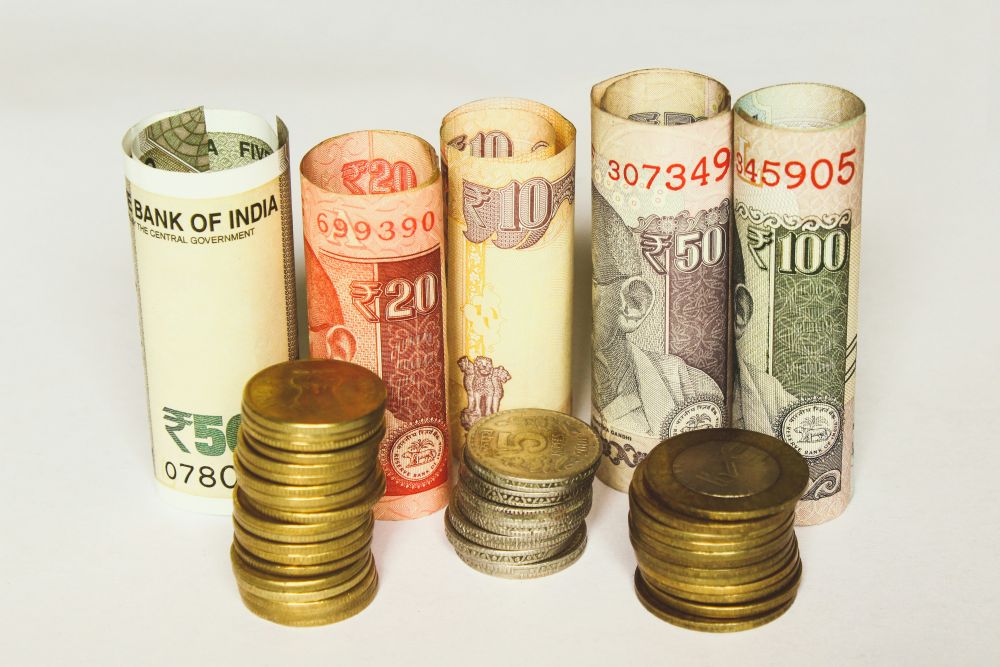
India is an economic paradox right now. On the one hand, we are doing phenomenally well. Close to 8% GDP growth, one of the highest in the world, paired with October inflation at just 0.25%. This is as close to a Goldilocks scenario as there ever was one.
Low inflation might sound like good news for your wallet — but for the Reserve Bank of India, which wants inflation to be low but not this low, it’s a warning signal. When prices fall too much, demand can freeze. So the RBI stepped in again, cutting the repo rate by 25 bps to 5.25%, the fifth cut this year. Lower rates generally spur growth and warm up inflation. Growth in India is on a tear, so there are no worries there.
Low rates, though, come with a side effect: making India less attractive to foreign investors who flee in search of higher returns elsewhere. When these investors exit, they sell rupees, dollars get bought, and the Rupee weakens. (More demand for dollars = dollars get more expensive).
And that’s precisely what we’re seeing.
The Big Question: Why Is the Rupee Weak When the Economy Is Strong?
The Rupee is now hanging around ₹90 per dollar, a level considered extreme not too long ago. In a textbook scenario, a falling currency should boost exporters. More rupees per dollar earned — sounds great.
But India is not a textbook case.
Our import bill is enormous, with crude oil accounting for a significant portion. We import close to 80% of our crude oil needs. Gold is also an import.
So when the rupee slides, we need more dollars to pay for imports; the import bill shoots up, putting extra strain on our budget.
India has scaled back Russian oil purchases due to higher tariffs, forcing it to buy more oil on the global market, where everything is priced in USD. That alone keeps the Rupee under pressure.
Add to that a muscular US dollar. High US yields and global jitters have made the dollar stronger against almost every emerging-market currency. The Rupee, along with its peers, is being pulled down by the tide. But the strangest twist is this: we have high growth and near-deflation at the same time. This combination is rare and sends mixed signals about our currency’s fair value.
Let’s Break Down Both Sides of the Tug-of-War
The dollar has been on a strong run due to:
Attractive US bond yields
Investors looking for safety
Global uncertainty
But now the US economy is showing cracks. The market expects the Fed — influenced heavily by President Trump — to cut rates more aggressively.
Typically, rate cuts weaken the USD. But when the cuts come from economic weakness, investors flock to the dollar for safety. Ironically, trouble in the US can make the dollar even stronger.
This is the bipolar nature of the USD. It weakens when America eases — and strengthens when the world panics.
The Indian Rupee Story
India’s pressures are also domestic:
A fast-expanding economy demands more imports.
Exports aren’t growing nearly as fast.
The trade deficit widens.
The Rupee falls or softens.
Foreign investors add another layer. If they earn 10% returns in India but the Rupee drops 3%, their dollar returns shrink. And when they sense the currency weakening persistently, they sell more, which further depresses the Rupee.
The Everyday Impact
A weaker Rupee touches more corners of your life than you realise:
Fuel prices creep up faster.
Gold becomes expensive even when global prices remain steady.
Flights, iPhones, electronics, and even foreign apps cost more.
Businesses face higher import costs, which are eventually passed on to consumers.
Only a few exporters — such as IT services — benefit directly from the weaker Rupee. Many others rely on imported raw materials, which wipes out their advantage.
Is Rs@90 a Crisis or a Signal?
It doesn’t seem that India’s low inflation is classic deflation from weak demand. It’s driven primarily by falling prices in high-weight items like food, while services and economic activity remain upbeat. So it seems that the Rupee’s fall is not a judgment on India’s fundamentals.
It’s a reflection of:
Global USD strength
Our reliance on imported essentials
FII outflows
Unusual inflation dynamics
Geopolitical shifts in oil sourcing
In fact, the currency slide highlights the areas that still need to be more self-reliant in energy, manufacturing & exports that are indispensable to the world like the Nvidia chips.
What Now?
Usually, the Reserve Bank of India intervenes when the INR starts falling aggressively. We have over $650 billion in reserves with the RBI, and when demand for dollars arises, the RBI supplies them. This stops the Rupee from falling very fast.
(If the demand for dollars greatly exceeds the supply, and the RBI does not intervene, then the market will ask for more and more rupees for a dollar till the demand is satisfied, and the rupee will fall further quickly.)
Foreign Portfolio investors have withdrawn close to 17 billion dollars this year, and our trade deficit has also widened. (Our imports are increasing against our exports.) India’s inability to conclude a tariff deal with the US is not helping matters.
Because our macros are in good shape, the RBI may be comfortable with the INR falling and not depleting its USD reserves, as we are inherently strong and they do not need to intervene very actively.
Next year, if FII’s see merit in India and start investing, and if commodities, especially oil prices, fall, INR can be a winner.
We may have to wait a bit before booking our next US holiday, though.
No Comment